

As seen on Grand Designs

We recently had the exciting opportunity to be featured on the hit Australian TV show Grand Designs. Our project involved transforming a kitchen in Fitzroy, a vibrant inner-city suburb of Melbourne, by using multiple bright colours that complemented the property's existing bright colour scheme. This feature gave us a chance to showcase the versatility of architectural wrapping and how it can completely change the look and feel of a space without the need for major renovations.
Architectural wrapping is a creative and practical solution for updating interiors and exteriors. In this post, we will explore how this technique works, why it’s so adaptable, and how it helped us bring a fresh, bold look to the Fitzroy kitchen. We’ll also share insights from the project and invite you to watch the episode to see the transformation in action.
What Is Architectural Wrapping?
Architectural wrapping involves applying specially designed films or materials over surfaces such as walls, cabinets, doors, or furniture. These wraps come in a wide range of colours, textures, and finishes, allowing designers and homeowners to customize spaces quickly and with minimal disruption.
Unlike paint, wrapping can be removed or replaced without damaging the underlying surface. This makes it an excellent choice for renters, those who want to experiment with bold designs, or anyone looking for a cost-effective way to refresh a space.
Key Benefits of Architectural Wrapping
Flexibility: Easily change colours or patterns to suit evolving tastes.
Speed: Installation is faster than traditional painting or tiling.
Durability: High-quality wraps resist scratches, moisture, and fading.
Cost-effective: Avoids expensive demolition or construction work.
Eco-friendly: Reduces waste compared to full renovations.
How We Used Wrapping to Transform the Fitzroy Kitchen
The Fitzroy property already featured a bright and eclectic colour scheme throughout its interior. Our challenge was to create a kitchen that felt cohesive with the rest of the home while standing out as a unique space.
Choosing the Colours
We selected a palette of vibrant colours including deep teal, mustard yellow, and coral red. These colours were chosen to complement the existing scheme and bring warmth and energy to the kitchen. The wrapping material allowed us to apply these colours precisely on cabinets, drawers, and even the backsplash area.
Installation Process
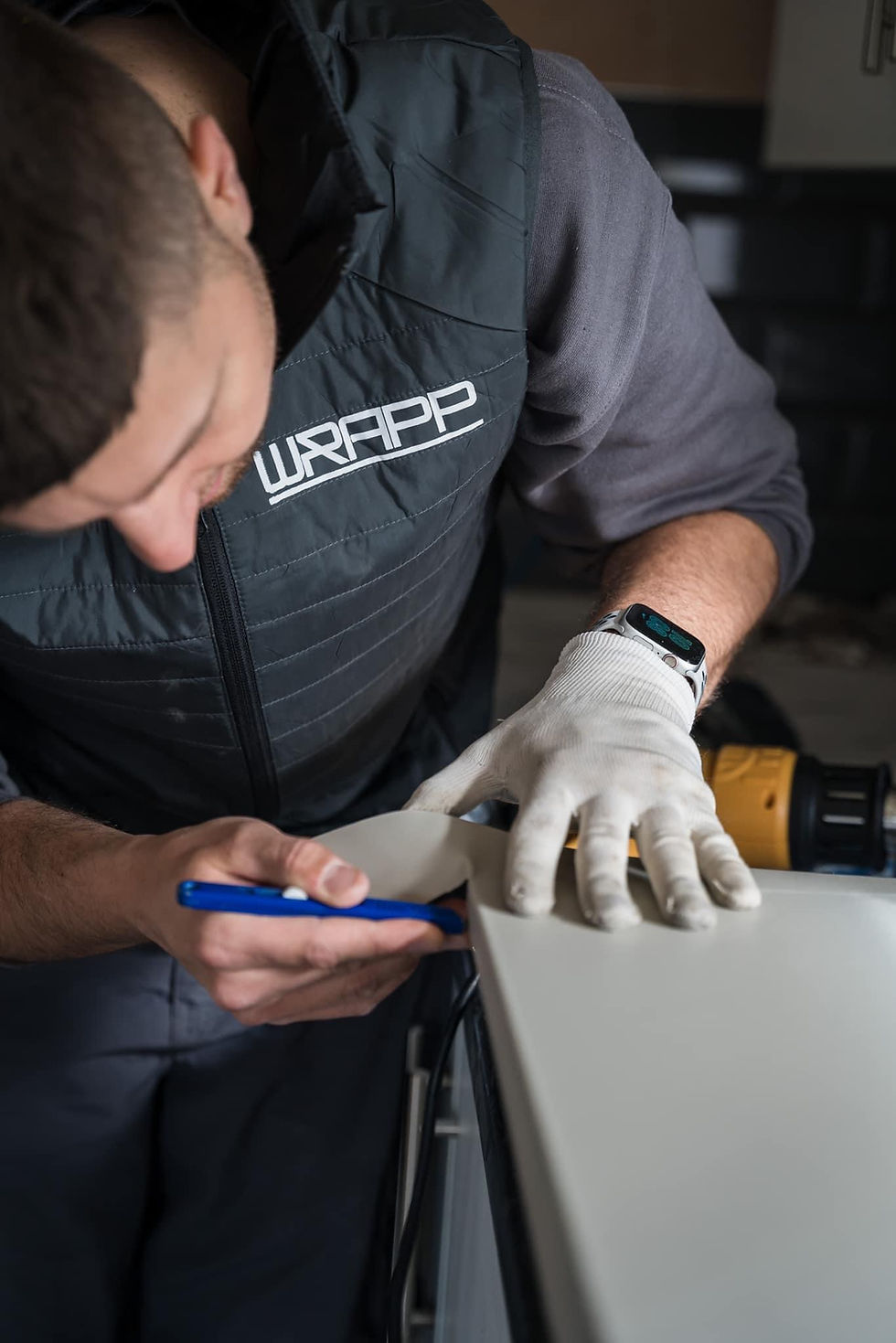
The wrapping was applied over the existing cabinetry and surfaces. Our team carefully measured and cut the films to fit each panel perfectly. The smooth finish of the wrap gave the kitchen a sleek, modern look while maintaining the character of the original design.
Practical Advantages
The kitchen was fully functional during the installation, minimizing disruption for the homeowners.
The wrap’s moisture resistance made it ideal for kitchen surfaces exposed to steam and spills.
The bold colours brightened the space, making it feel larger and more inviting.
Versatility of Architectural Wrapping Beyond Kitchens
While our Fitzroy project focused on a kitchen, architectural wrapping can be used in many other areas of a home or commercial space.
Examples of Use
Bathrooms: Wrap tiles or vanities to add colour without retiling.
Furniture: Update old tables, shelves, or wardrobes with new textures.
Walls and Ceilings: Create accent walls or unique ceiling designs.
Commercial Spaces: Brand interiors with company colours or patterns.
This versatility means wrapping can suit a wide range of styles, from minimalist to maximalist, traditional to contemporary.
Tips for Choosing the Right Wrap for Your Project
If you’re considering architectural wrapping, here are some practical tips:
Surface Preparation: Ensure surfaces are clean and smooth for best adhesion.
Material Quality: Choose high-quality films designed for your specific use (e.g., kitchen, outdoor).
Colour Selection: Test samples in your space to see how colours look in different lighting.
Professional Installation: While DIY is possible, professional installers can avoid bubbles and wrinkles.
Maintenance: Use gentle cleaning methods to preserve the wrap’s finish.
Watch Our Grand Designs Episode
To see the full transformation of the Fitzroy kitchen and learn more about our approach, watch the episode on ABC iView: Grand Designs Fitzroy Kitchen Transformation.
This episode highlights how architectural wrapping can be a creative and practical tool for interior design, especially when working with bold colour schemes.
Architectural wrapping offers a flexible, fast, and cost-effective way to transform spaces. Our Fitzroy kitchen project on Grand Designs shows how this technique can bring colour and personality to a home without the hassle of traditional renovations. Whether you want to refresh a single room or update multiple surfaces, wrapping provides endless possibilities to express your style.

Comments